Featured

Literary Blog #1

The power of choices in multi-cultural literature pieces

“The Guest” by Camus

“The Metamorphosis” by Kafka

From this week’s readings, there was an overwhelming theme throughout the passages that we analyzed. That theme was one that could be seen as a Christian parable and also just about choices and the powerlessness we sometimes feel we have over those choices. Life is full of decision making and humans are sinners by nature. Sometimes the things we choose to do were once of pure intention but did not end purely. However, sometimes our fate is already sealed and the choices we make directly impact that fate. This theme of powerlessness being determined by choice is seen in “The Guest” by Camus and “The Metamorphosis” by Kafka.

STUDENT ACTIVITY

Arrange the student’s desk in a circle. This promotes better discussion. Firstly, ask the students to get out a piece of paper to answer the discussion questions. Before you begin the readings, ask the students “What is one choice you can think of that changed the rest of your life?” It can be small or big. Have them think really hard. If they can not think of one, have them write down one that was made by someone else in their life but affected their lives. Remind the students to remember this question and also to focus on the powerlessness that will be found in the readings.
“The Guest” by Albert Camus

Disclaimer: If you have not seen Star Wars: The Rise of Skywalker and you do not want ANY to read any spoilers, then stay far away from this blog entry.

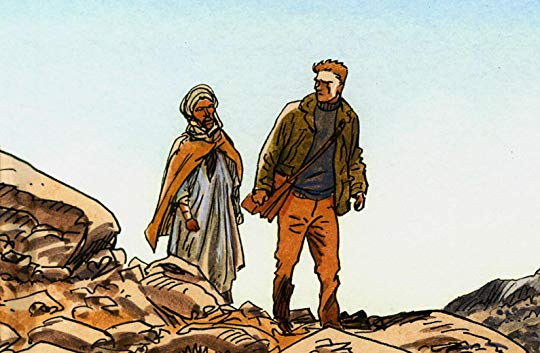
In “The Guest”, by Albert Camus, it tells a story of how a man that wanted to be in control of his choices despite the obvious powerlessness his job entailed. This man was commanded to deliver a prisoner but he had other plans in mind. Daru made a decision that was of goodness from his knowledge but it was too late for those types of decisions. “That’s the trail across the plateau. In a day’s walk from here you’ll find pasture lands and the first nomads. They’ll take you in and shelter you according to their law.” (Puchner, 2013) Daru said. This was Daru’s choice and he wanted to give the prisoner freedom. But it was too late, yet again. From the moment Daru took his post, his fate was sealed and he would always be seen a traitor. It did not matter if the prisoner had chosen the other option. There were choices being made but that would not change the outcome. The only choice that mattered was the one Daru made when he took up the job, that was when his powerlessness truly began. The theme of powerlessness is seen heavily in certain movies today such as in Star Wars: The Rise of Skywalker… *SPOILER ALERT* Kylo Ren is being commanded by Palpatine to destroy Rey so that victory would happen for the Dark Side. Kylo never ended up killing Rey but Palpatine knew that would happen because he foresaw everything. Kylo Ren’s fate was already sealed no matter what choice he made because the Palpatine could see his intent and knew he would never kill her.
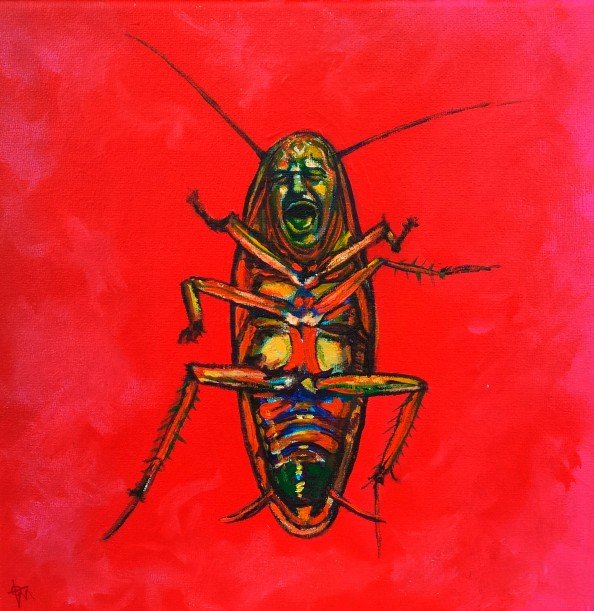
“The Metamorphosis” by Kafka

In “The Metamorphosis” by Kafka, the reader can greatly feel powerlessness from the main character, Gregor. Gregor was transformed into a bug against his wishes he believed, but were they really against them? Gregor had wished for “The Devil take it all!” (Puchner, 2013) and it was probably not the first time. Maybe this meant he had in some way turned himself into a bug because of his choices. Turning to the Devil for some sort of relief first from his life, is probably what got him to his retched state. Similar to how “The Guest” was a story of predetermined fate, maybe Gregor’s fate had already been sealed way before he was ever turned into a bug based on his wishes. Could Gregor have fought harder to make his family accept him? Could he have found some way to co-exist with his human family and or found a way back to being a human? Either way, both men suffered at the cost of their own choices. The story of Gregor can be compared to stories that are popular in today’s society such as Superman. In this movie, a teen was Peter was turned into something other than human and he had no choice in the matter.

SMALL GROUP INSTRUCTION

Place students in two separate groups and have one group discuss “The Guest” and the other group discuss “The Metamorphosis.”

For “The Guest” group, ask them:

  1. Do you think Daru would have made the same choice even if he knew he would always be viewed as a traitor in the end?

For “The Metamorphosis” group, ask them:

  1. Did Gregor wish for this transformation without realizing? Do you think he would have tried harder to stay alive as a bug if he had known he had wished for his state?

After groups have discussed then switch the groups and ask the same question again. Afterwards, have the students write a one page paper on one or the other stories with what they think the main character should have done differently.

Works cited

Camus, Albert. “The Guest.” The Norton Anthology of World Literature, edited by Martin Puchner, Shorter 3rd ed., Vol. 2. New York: Norton, 2013, pp.1201-1235.

Kafka, Franz. “The Metamophosis.” The Norton Anthology of World Literature, edited by Martin Puchner, Shorter 3rd ed., Vol. 2. New York: Norton, 2013, pp.1201-1235.

Literary Blog #8

“The Perforated Sheet,” by Salman Rushdie

“Girl,” by Jamaica Kincaid

Global Literature that blurs national boundaries and shines the light on cultural identities

This week’s readings centered around Global Literature in the 20th and 21st centuries. The theme for this week’s readings was the pieces of work that blurred national boundaries and went in depth into cultural identities. As seen in “The Perforated Sheet” by Salman Rushdie it centers around the main characters identity being rooted in India after its newfound independence from Britain. In the other reading we will analyze “Girl” by Jamaica Kincaid, her literary work can connect to people all over the world. To define Global Literature is to create literary works that know no boundaries. Throughout the last eight blogs, we have explored literary works that transcend time and place. Works that can be connected to humanity today and rooted in social structures in varying countries.

STUDENT ACTIVITY

This week we will be tying together all of the literary works we have gone over the last term but also going over two pieces of work that explore Global Literature in the 20th and 21st century. For this assignment, arrange the students desk in a circle to promote discussion. Before the beginning of the assignment, have the students write down their ethnicity and cultural practices that are relative to their ethnicity. At the end of the week, do a potluck of food that is foods from all over the world.

“The Perforated Sheet,” by Salman Rushdie

In Rushdie’s short story, it begins with the main character speaking about how his birthday fell on the day India gained independence from Britain. This was important to the theme of cultural identity. His story really begins with his grandfather though. There is a part in the story where his grandfather bumps his nose causing him to bleed. This happened while he was trying to pray and due to the nose injury, he renounced his religion. This creates a hole in literal and figurative terms for his grandfather’s cultural identity. “This decision, however, made a hole in him, a vacancy in a vital inner chamber, leaving him vulnerable to women and history.” (Rushdie, 1980) The perforated sheet as the title symbolizes the hole that was found in his grandfathers identity. In the end, his grandfather finds love and it fills the void he had felt upon losing his religion. A popular culture comparison that can be made is to the movie Eat Pray Love starring Julia Roberts. The main character leaves everything shes ever known to go on a path of self discovery after divorcing her husband. The main character is lost as to what is important to her and she partakes on a path of self discovery. She indulges in men, food and new cultures during her journey.

DISCUSSION QUESTIONS

  1. As you grow up and leave home, you may find yourself discovering new things that were not once apart of your cultural identity. Or you may give up pieces of yourself that no longer serve you. Are there any cultural traits you identify with that you will never give up? Examples like religion, cultural traditions, etc.
  2. Was the main character filling the void with the woman he met or was he simply just recreating his identity through someone else? Can you do that?
  3. What examples in the story by Rushdie touch on the stray from cultural identity the main character’s grandpa experienced?

“Girl,” by Jamaica Kincaid

“Girl” by Jamaica Kincaid touches on the role that women play. The gender constructions created by society. Jamaica Kincaid writes a short story describing her mother and focusing on that relationship. Kincaid’s story blurs national boundaries because there is no sense of place in her story. Anyone can read it and anyone can relate to it or interpret it in their own way. “you mean to say that after all you are really going to be the kind of woman who the baker won’t let near the bread?” (Kincaid. 1978) This quote from Kincaid’s story touches on the type of women to be emulated. By writing about a girl and being a female author, she battles against the longstanding pieces of literature from her culture that were predominantly male and about males. Jamaica Kincaid gives girls around the world, their voice through finding her own. A popular culture comparison can be made to the movie Queen of Katwe. A movie about a young girl living in poverty in Uganda. Through meeting the right people and perseverance, doors begin to open for the main character. The movie touches on the struggle the girl faces but also how she overcomes it and finds her voice.

DISCUSSION QUESTIONS

  1. Kincaid’s story transcends time and place. Are there any parts of the story that show cultural traditions specific to a place?
  2. How would you define Global Literature? Does Kincaid’s story meet that definition?
  3. We emulate our parents or elders. In what ways do you find yourself copying your elders? What habits?

ASSIGNMENT OPTIONS

OPTION ONE

Bring a dish

For the final assignment, there will be a potluck at the end of the week. Go home and find a meal that is traditional for your family. Write a short story with the recipe on why that food has become a tradition for your family. (If you do not partake in this option, then you must bring other utensils or items needed for the potluck)

OPTION TWO

MOVIE AND PAPER

Find a movie that you find your cultural identity resonating with. Write a paper of why your life relates to that movie and how you find your cultural identity.

Literary Blog #7

Post-Holocaust literature and the theme of dehumanization

“This Way for the Gas, Ladies and Gentlemen,” by Taduesz Borowski

“The Daydreams of a Drunk Woman,” by Clarice Lispector

There is an overwhelming sense of dehumanization from this week’s readings. The author uses several literary elements to emphasize that theme. The post-holocaust time period is one that was changed the lives of Jewish’s writers. “Regarding the Holocaust, this seems unconscionable, even blasphemous. The horrors of Auschwitz and Buchenwald need no artistic amplification.” (Kaiser, 2010) As seen in Borowski’s tone in his “This Way for the Gas, Ladies and Gentlemen” that lack of artistic amplification is seen. Borowski’s tone was void of life. Some could interpret rage in his work. Rage for the suffering that the Jewish endured. In comparison, in “The Daydreams of a Drunk Woman,” by Clarice Lispector, there was entirely different form of dehumanization taking place. A dehumanization of women.

STUDENT ACTIVITY

Arrange the students desks in a circle to promote better discussion methods. Once in a circle, ask the students what they know of the Holocaust. Note on how the time period after the Holocaust was one that was void of humanity in every sense. We will make popular culture comparisons for both stories from this week’s readings and then there will be an assignment at the end of the readings. Have the students read the story as a class by going around the circle and having each student read a passage. Have them highlight parts of the passage that contain dehumanizing qualities in both passages that will be read.

“This Way for the Gas, Ladies and Gentlemen,” by Taduesz Borowski

Taduesz Borowski wrote with such description that the reader could feel everything the main character was going through. However, he did not need any emphasizing literary elements to portray the elegiac tone of the story. The main character is a prisoner in a concentration camp. Through his actions in the short story, the theme of dehumanization is heavily seen. Such as in the quote “It is the camp law: people going to their death must be deceived to the very end. This is the only permissible form of charity.” (Borowski, 1946) The prisoners are lied to and led to their deaths without any semblance of mercy. As seen in the story, the people would load up with all the nicest jewelry they owned and then they would be unloaded from the trucks just to die. The people did not know they would not be spared for their riches. The tone of Borowski’s story is one that lacks passion but his work is powerful at conveying the lack of humanity despite that. The effect of first-person narrative also emphasizes every dehumanizing moment. A popular culture comparison that can be made is to the movie “The Boy In The Striped Pajama’s” a British movie that can be found on Netflix about a little boy whose father is a Nazi befriending another little boy who is a prisoner of concentration camp nearby their home. There is several instances where dehumanization is seen in the movie through differing actions. The movie ends in tragedy for both boys.

DISCUSSION QUESTIONS

  1. Which moment was the most dehumanizing moment in the story? Was there not one moment but rather the whole story was dehumanizing? Have students raise their hand and note on quotes from the story.
  2. Ignorance is bliss in the movie “The Boy in the Striped Pajama’s” Do you think this dehumanizes someone when they choose to withhold information that may be too much for their emotion to handle?
  3. What emotion does the main character feel the most throughout the story? Does he have any emotion or is he just in survival mode?

“The Daydreams of a Drunk Woman,” by Clarice Lispector

The story by Clarice Lispector was a stark difference from Borowski’s. However, the story highlights more dehumanization that was taking place post-Holocaust. Those being dehumanized were women, among others. “The Daydreams of a Drunk Woman” is a short story about a woman who is married with children. The woman’s children leave to the countryside and she finds herself mixed with emotion. The woman does not feel she has any sense of purpose beyond being a mother and a wife. This results in her drinking excessively until her children return. “Naturally she talked, since she lacked neither the ability to converse nor topics to discuss. But the words that a woman uttered when drunk were like being pregnant—mere words on her lips which had nothing to do with the secret core that seemed like a pregnancy.” (Lispector, 1960) The woman feels anger throughout the story at her circumstances. She felt she had amounted to nothing and when in the presence of men, she had nothing to contribute to the conversation. This notes on the dehumanization by men of women during this time period. Women were given no voice or place. A popular culture comparison can be made to the movie “Hidden Figures.” A movie, based on a true story, about three African American women who were the brains behind operations taking place at NASA. In America, women in STEM fields was rare back during the time period that Hidden Figures was based in. There were gender constructions going on in many parts of the world. In some of those places, women were deemed not knowledgeable or even deserving of obtaining educations.

DISCUSSION QUESTIONS

  1. What emotion does the woman feel throughout the story? Why do you think she feels such emotion? Some that can be analyzed are anger, boredom, and sadness.
  2. How was the woman dehumanized in the story? Were there any parts that stood out to you?
  3. In Hidden Figures, women are working as mathematicians for NASA which was deemed uncommon. Can you make comparisons to Lispector’s story about women being underestimated it seemed?

ASSIGNMENT OPTIONS

WATCH A MOVIE

Choose one of two movies from the blog analysis. Write a paper on dehumanization after watching the movie. Give examples and compare to real world scenarios.

OPTION 1-“THE BOY IN THE STRIPED PAJAMAS”

Watch “The Boy in the Striped Pajamas” then write a paper about dehumanization. There are parts of the story that are inaccurate regarding the camps. Note on the inaccuracies in the story compared to real world.

OPTION 2-“HIDDEN FIGURES”

Watch “Hidden Figures.” Highlight parts of dehumanization and women oppression that can be seen in the movie. Compare the movie scenes to real life events that took place in other countries or in the United States.

WORKS CITED:

“This Way for the Gas, Ladies and Gentlemen,”” The Norton Anthology of World Literature, edited by Martin Puchner, Shorter 3rd ed., Vol. 2. New York: Norton, 2013.

“The Daydreams of a Drunk Woman” The Norton Anthology of World Literature, edited by Martin Puchner, Shorter 3rd ed., Vol. 2. New York: Norton, 2013.

Literary Blog #6

Latin American culture and the use of magical realism

““Death Constant Beyond Love,” by Gabriel Garcia-Marquez,

“And of Clay Are We Created,” by Isabel Allende

This week’s readings centered around Latin American literature and focused on literary elements like the use of magical realism. The cultural theme from this week’s readings intertwined fate and the finality of death. Through literary elements, each author placed an emphasis on how choices can lead to different outcomes but in the end, what is meant to happen, will happen. In “The Garden of Forking Paths” the use of magical realism is seen. In “And of Clay Are We Created”, this short story is about a little girl who is unable to be saved but there is a sense of peace and acceptance despite her fate.

STUDENT ACTIVITY

Have the students desks arranged in a circle to promote discussion easier. Once students are in their desks, give them a blank piece of paper and have them create origami’s of choice. Throw out some ideas like paper airplanes and butterflies. This is a fun activity and will help the students visualize parts from in “Death Constant Beyond Love” After they are finished with the origami, read the short story with the students. Have each student go around the circle and read a passage. This will promote public speaking skills and ensures every student is reading along.

“Death Constant Beyond Love,” by Gabriel Garcia-Marquez,

Much of Garcia-Marquez’s short story was a facade. The short story is about “The Senator” who is told he only has six months left to live. The Senator struggles to make sense of his life and he is faced with a decision during the story. A decision of choosing temptation or not. However, the temptation is a double edged sword. The Senator is a very lonely man even though he has a family and created a nice life. Garcia-Marquez was going to be met with death soon, and it was inevitable. This theme was recurring throughout the story, no matter what decision he made. The Senator created this life through lies and with the use of paper structures. Paper buildings that represent false promises. The story is enchanting and almost is dreamlike. Garcia-Marquez creates this effect through magical realism. “As he spoke his aides threw clusters of paper birds into the air and the artificial creatures took on life, flew about the platform of planks, and went out to sea” (Puchner, 2013) This quote represents one example of the use of magical realism used within the story. This quote will need to be focused on and bring the students attention back to the origami they did. A pop culture comparison that can be made is to The Mortal Instruments: City of Bones movie. It is a movie based on the fantasy novels by Cassandra Clare. There is a heavy use of magic throughout the story to create facades and separate reality from this world within a world. The scene below is when the main character Clary can see one of the “shadowhunters” despite the fact that she should not be able to.

DISCUSSION QUESTIONS

Ask the students these questions through the use of raising their hands and calling on different students. Ask students to jot down their answers or ideas on note paper.

  1. The use of magical realism throughout the story is prevalent, can you say where you see another example of the use of it?
  2. There is a sense of finality because The Senator knows his death is coming. Do you think he would have still been led to temptation with the young girl if he had not been on limited time?
  3. In the movie scene, Clary is able to see Jace. Jace had been using a “facade.” Can you make a comparison to Garcia-Marquez’s story about the use of “facades” ?

“And of Clay Are We Created,” by Isabel Allende

“And of Clay Are We Created” is based on a true story about a little named Omayra Sanchez who died after being stuck because of a mudslide. Isabel Allende recreates Omayra’s story using literary elements like magical realism to create a short story that emphasized the issue of media saturation in society and its negative effect. In Allende’s short story, a young girl is stuck after a mudslide. A rescuer and his lover are the main character in Allende’s short story and the rescuers lover recounts the experience through her eyes. The young girl becomes the center of national attention due to her rescue attempt. Allende uses magical realism in the story to tell the tale. Technology was how Allende used magical realism within the story. “But on the night of that third day, beneath the unblinking focus of quartz lamps and the lens of a hundred cameras, Azucena gave up, her eyes locked with those of the friend who had sustained her to the end.” (Puchner, 2013) Much like in real life, there was a disconnect between the viewer and Azucena. The media wanted to plaster her face all over the news but nobody was able to connect with Azucena or get the life-saving help she needed before it was too late. A pop culture comparison that can be made is in the movie “Her” starring Joaquin Phoenix. The main character in the movie falls in love with a computer operating system. Society is so connected to technology and media that it grows further and further from reality and the physical world. Beyond that, the lack of real human emotion is smothered by technology in both Allende’s story and the movie “Her.”

DISCUSSION QUESTIONS

  1. Ask each student how much time they spend per day on their phones, computers or watching TV. After this, ask them to write down ways they can communicate without using technology.
  2. Technology is the focus of Allende’s story. It pushes everything and everyone else away further from getting the little girl the help she needs. Rolf’s lover felt desperation to find help for the little girl. Could they have spent more time getting help before they pulled the camera’s out? Why do you think they were so quick to post her photo everywhere but not use that same attention, to get her help?
  3. What emotion is the most prominently felt through Allende’s story? Fear? Desperation? Ignorance?

ASSIGNMENT OPTIONS

CREATE A NEW WORLD

Option one:

Write a short story using magical realism centered around fate. Create a new world that is fictional. Choose one main character for the story and create a scenario for the character centered around choices and fate. Make sure to include two to three uses of magical realism within the story.

COMMUNICATE WITHOUT TECHNOLOGY

Option two:

(Assign students to partner)

Write a letter to a fellow classmate for the next three days. Exchange letters back in forth to each other. Letter’s must be a paragraph long at minimum. Talk about emotion and other forms of expression that are often lost in technology.

WORKS CITED

“Death Constant Beyond Love” The Norton Anthology of World Literature, edited by Martin Puchner, Shorter 3rd ed., Vol. 2. New York: Norton, 2013.

“And of Clay Are We Created” The Norton Anthology of World Literature, edited by Martin Puchner, Shorter 3rd ed., Vol. 2. New York: Norton, 2013.

Literary Blog #5

The importance of national identity in African American culture

“Chike’s School Days” by Chinua Achebe

“Notes of a Native Son,” by James Baldwin

This week’s readings explored excerpts from African American literature. The central theme of the readings was a strong sense of national identity and what it means to African American culture. The reader can interpret that identity can sometimes be found through symbolism or through names. Names were a important part of this week’s readings and in the story “Chike’s School Days” by Achebe, this can be observed. Identity is also heavily found through self-expression and dress. Both stories show two different forms of identity but both are rooted similarly to African American culture.

STUDENT ACTIVITY

Arrange the students desks in a circle. Ask the students to reflect on what the word culture means to them and ask them how they express their culture in their lives. They can write this down on a piece of paper. Once they are finished with that, have them read both “Chike’s School Days,” by Chinua Achebe and “Notes of a Native Son,” by James Baldwin for this week’s blog.

“Chike’s School Days” by Chinua Achebe

“Chike’s School days” by Chinua Achebe is a story of two worlds colliding. John Chike Obiajulu is the first born son to his parents Sarah and Amos. His name represents the two very different worlds his parents came from becoming one in him. John is a Baptist name that represented their faith. Amos, his father, married Sarah against his village’s wishes because he was breaking their codes by marrying someone lower in status. Obiajulu means “the mind is at last at rest.” (Achebe, 1960) Obiajulu represents their African American culture and by pairing it with John, Achebe shows how names represent identities. Chike’s identity is told through his name and it tells a story of how two people from different cultures completely came together. It also remains true to each individual culture and honors them in a small but big way. A pop culture reference that can be made is the movie Aquaman. Aquaman’s real name was Arthur. His mother was from under the sea, Atlantis, and his father who lived on land, found her badly hurt. His mother broke tradition by having a child with the man who found her. Arthur represented the two worlds.

STUDENT DISCUSSION QUESTIONS

Ask students these three questions and go around the circle to make sure every student has given their take on at least one question by raising their hand and sharing with the class.

  1. Does your name have any meaning that is important to your family? Such as being named after someone or is your name of a certain nationality?
  2. How is Chike similar to Arthur in Aquaman? What do they have in common?
  3. What parts of the story talk about the identities of Chike’s parents? Give examples of quotes from the story that show literal expression.

“Notes of a Native Son,” by James Baldwin

In “Notes of a Native Son” by James Baldwin, it tells a story of a son navigating his father’s and his own identity. The son in the story wants to understand his fathers legacy and learn more about his culture. Some of the cultural expressions in the text was through the description of his father and how he felt he would have looked “But he looked to me, as I grew older, like pictures I had seen of African tribal chieftains: he really should have been naked, with war-paint on and barbaric mementos, standing among spears.” (Baldwin, 1955) The story is of strong African American cultural tones. The son’s trying to find his identity by tracing his fathers. The son also had begun to realize the struggle he would face as his father did. He felt he had much more in common with his father just simply based on the color of their skin. The main thing he learned through it all was the injustice he felt. Injustice because of skin color and of expression. African American culture is wrongly defined by stereotypes at times and that is something that was prominent in this story. A pop culture comparison can be made to the movie Antwone Fisher. A movie about a boy who is struggling to understand his place in the world. Below is a scene of him meeting his mother.

STUDENT DISCUSSION QUESTIONS

  1. Does the narrator in Notes of a Native Son seem to be having a battle with himself on how he wants to be understood vs how the world understands him?
  2. How does Antwone relate to the narrator in Notes of a Native Son?
  3. What other parts of the story help identify his culture and his connection to it in Notes of a Native Son?

ASSIGNMENT OPTIONS

WRITE A PAPER

Option 1:

Make a detailed list of how your culture can be identified in your daily life. It can be through how you dress, what colors you wear, what languages you speak. Once you have identified those, explain why you express your culture and its importance to you.

FIND THE ROOT MEANING OF YOUR NAME

Option 2:

Figure out what your name means and then explain why you were named that. If you are unable to explain your name’s origins, then explain the cultural origins of your name and how it has defined you.

WORKS CITED:

“Chike’s School Days” The Norton Anthology of World Literature, edited by Martin Puchner, Shorter 3rd ed., Vol. 2. New York: Norton, 2013.

“Notes of a Native Son” The Norton Anthology of World Literature, edited by Martin Puchner, Shorter 3rd ed., Vol. 2. New York: Norton, 2013.

Literary Blog #4

Native American Spirituality

“The Night Chant (Orature Section)” from Navajo Ceremony

“Yellow Woman” by Leslie Marmon Silko

The cultural theme that can be seen in this week’s readings is the importance of spirituality to Native American tribes. Spirituality was an integral part of the identity for Native American individuals. The reader can interpret from both reading’s the varying relationships that Indian’s can form with the God’s they worship. In “The Night Chant” it is a ceremony of healing while in “Yellow Woman” it is a story of helplessness and benevolent spirits. We will analyze both stories and their cultural influence on literature.

STUDENT ACTIVITY

This week’s content will take a few days to get through and it is important to immerse the student as much as possible into the culture of Native American tribes. For the first day, we will make a popular culture comparison by having the students watch a popular Disney movie trailer known as Brother Bear. Assign the students to watch the full movie at home as homework. This comparison shows the importance of how nature can sometimes turn on the Native American people. Students will also notice this theme in “Yellow Woman.”

“Yellow Woman” by Leslie Marmon Silko

Nature is telling for the story of “Yellow Woman.” A Pueblo Indian woman finds herself entranced with a seductive Navajo man. It seems as if it is going to be a brief affair but the woman cannot find the strength to leave without saying goodbye. The woman touches on the story told by her elders about “Yellow Woman” which was a story about a woman who became trapped by a benevolent spirit called ka’tsina associated with forms of water. It becomes evident that the woman has now become one of the stories her grandparent warned her about. The woman is in denial that she is not being trapped by a ka’tsina but all the signs such as water and lack of anyone else in the first part of the story indicate otherwise. The woman has left behind her family but finds no desire to escape from the man. Everything is entrancing and keeping her wrapped up in the arms of the ka’tsina. The dream does not last though. The man takes her along with him after stealing and butchering livestock to sell the meat. Everything shatters when she is forced to flee due to the man being discovered a thief. The woman returns to her home and does not speak of what happened “I decided to tell them that some Navajo had kidnaped me, but I was sorry that old Grandpa wasn’t alive to hear my story because it was the Yellow Woman stories he liked to tell best.” (Silko)

STUDENT DISCUSSION QUESTIONS

Ask students these three questions and go around the circle to make sure every student has given their take on atleast one question by raising their hand and sharing with the class.

  1. Nature is important to both the story of “Brother Bear” and “Yellow Woman.” Nature can be unforgiving it seems to the Native American tribes. How was nature unforgiving in each story?
  2. In “Yellow Woman”, the woman speaks of her grandparents telling the haunting stories of “Yellow Woman” past. Do you think Native American’s viewed outsiders (such as colonists) as benevolent spirits or non-human?
  3. Native Americans worshiped nature and spirituality was rooted in that. What obvious forms of nature were of importance for both stories?

“The Night Chant (Orature Section)” from Navajo Ceremony

“From the pond in the white valley—

The young man doubts it—

He takes up his sacrifice,

With that he now heals.

5With that your kindred thank you now.

From the pools in the green meadow—

The young woman doubts it—

He takes up his sacrifice,

With that he now heals.

10With that your kindred thank you now.” (Navajo Ceremony)

Native American ceremonies have long played an essential part of their culture. They communicate to the God’s through rituals and ceremonies. The use of repetition and symbolism are typically seen in their ceremonies. A popular culture comparison can be seen in “Man of The House” in this short clip, they are participating in a “naming ceremony” … This one is a good laugh. Anyways, in the “Night Chant” they are begging the Gods to heal their bodies physically and mentally. Through the use of repetition they emphasize their wishes. They also give thanks at the end of the chant. The ceremonies tell a story such as “Night Chant” from beginning to end.

STUDENT DISCUSSION QUESTIONS

  1. Repetition is seen in the Night Chant. Which emotion do you see being expressed through their words the most?
  2. Why do you think they use repetition so much in Native American ceremonies and rituals?
  3. Can you think of other times you have seen repetition be used in western literature as a form of expression?

ASSIGNMENT OPTIONS

WRITE A CHANT

Option 1:

Write your own “chant” that describes nature and spirituality. It can be a plea for something. Whatever you desire. Make sure it is a minimum 10-15 lines. Repetition must be used and a reference to nature. After you write the chant, explain what is going on during the chant such as where the chant is taking place and during what time of day.

WRITE A PAPER

Option 2:

Research spirits or deities of either goodness or darkness in Native American culture and write a short story about the spirit. Make sure to intertwine the natural form of the spirit with the literal form in the story. Such as the ka’tsina being seen as a maverick Navajo man. Must be a minimum of one page.

WORKS CITED

“Yellow Woman” The Norton Anthology of World Literature, edited by Martin Puchner, Shorter 3rd ed., Vol. 2. New York: Norton, 2013.

“Night Chant” The Norton Anthology of World Literature, edited by Martin Puchner, Shorter 3rd ed., Vol. 2. New York: Norton, 2013.

Literary Blog #3

The importance of traditions in Eastern Literature

“Sealed off” -Zhang Ailing 1943

“Man of La Mancha” -Chu T’Ien-Hsin 1994

This week’s theme in our readings was modernization. The readings are from the 19th and 20th century. They are influential stories for Eastern literature as they began to exude Western Literature characteristics. “Diary of a Madman” was China’s first modern short story. All of the stories make the reader question how societies expectations can be demanding. It can drive people to do things that normally would never have done, or are they just following what they were always meant to do before society created pressure?

STUDENT GROUP INSTRUCTION:

Arrange desk in a circle for students and then sit in the middle of the circle for the reading of the passages for each story. This promotes the group setting and the students are facing each other.

“Sealed Off” by Zhang Ailing 1943

Sealed Off is a Chinese short story that takes place in Shanghai during World War II. Wu Cuiyuan is a young female English instructor who feels a void in her life. Lu Zongzhen is a married accountant with kids. They find themselves stuck in a tram car together and Zongzhen attempts to avoid his cousin and falls into the seat beside Cuiyuan. Cuiyuan is desperate to feel understood and listened to on the same level as a man would. Zongzhen and Cuiyuan engage in a flirtatious banter and Cuiyuan is entranced that he actually notices her. During this time period there was strong familial expectations and tradition placed on people. Both main characters feel resent towards their lives and current situations. A pop culture comparison could be made to the movie “Before We Go” starring Chris Evans. The movie is about two people meeting by chance encounter and they get stuck together for the evening in Manhattan. The main female character is married but finds herself and the male main character enjoying the time they have together. The story parallels “Sealed Off” in the sense that they were both chance encounters that led the characters to one another and they both feel pressure from society or the people in their lives to live a certain way.

Ask students after watching this video… “Are decisions being made in “Sealed Off” that could alter the rest of their lives? Does societies expectations determine the magnitude of choices?”

DISCUSSION QUESTIONS for after the first passage.

Ask students these three questions and go around the circle to make sure every student has given their take on atleast one question by raising their hand and sharing with the class.

  1. Do Zongzhen and Cuiyuan feel resentment because of the monotonous feel of their lives?
  2. Chinese traditions were very prevalent during this time period, breaking away from those traditions would be frowned upon. Did both characters feel they had something to lose if they broke away?
  3. Do you think Zongzhen would have talked to Cuiyuan had he not been trying to avoid his cousin? Was the meeting of the two inevitable?

“Man of LaMancha” – Chu T’Ien-Hsin 1994

“Man of LaMancha” is a story that shows a clear difference in the times. Its much more modernized based on its descriptions of the narrators surroundings. There is also a theme of powerlessness that can be found in the story felt by the narrator. He has no control of his inevitable death and he fears he will not be able to ever see it coming. The story can be compared to our first week’s readings such as “The Guest” by Albert Camus because of the lack of control he has over his fate. A pop culture reference could be the movie “5 feet apart” because it tells a story of two teen’s with cystic fibrosis that also do not have any control of their lives and how their lives may end. There is a sense of time running out in the story that leads the characters to make decisions. “Man of LaMancha” is similar in that sense of the narrator being terrified he has not had enough time to make something of himself and meet societies expectations. Does it matter what we have done or have on us when we pass? Has society created false expectations for how one should live their life?

DISCUSSION QUESTIONS for after reading of the passage.

  1. Do you think the narrator would have less anxiety about the imminent doom he feels if he knew when he was going to die or just pass out?
  2. The narrator places his worth in his identification cards and what would be found on him when he passes, do you agree with him that those things equate to worth?
  3. What differences do you see with “Man of LaMancha” and “Sealed Off” as far as how times have become more modernized?

FINAL ASSIGNMENT (CHOICE OF TWO OPTIONS)

After both stories have been read and videos have been watched (may take a couple days to get through this weeks content) ..

Assign the students two paper options based on which story they pick.

Option one:

WRITE A PAPER

Write an alternate ending for the story “Sealed Off” and write it as if the scene between the two main characters was not a dream for Cuiyuan. The story must contain a good understanding of Chinese traditions and consequences for breaking away from their traditions.

Option two:

CREATE A ID CARD

Write a short biography of yourself based on your accomplishments and then create a ID card that reflects your choices in life. Once ID card is made, write a few sentences for what someone could determine about you if you were found incapacitated. Make sure to include outfit choices and any other identification that could help someone determine who you were.

Literary Blog #2

Understanding Wen in Eastern Literature and the theme of spiritual connections

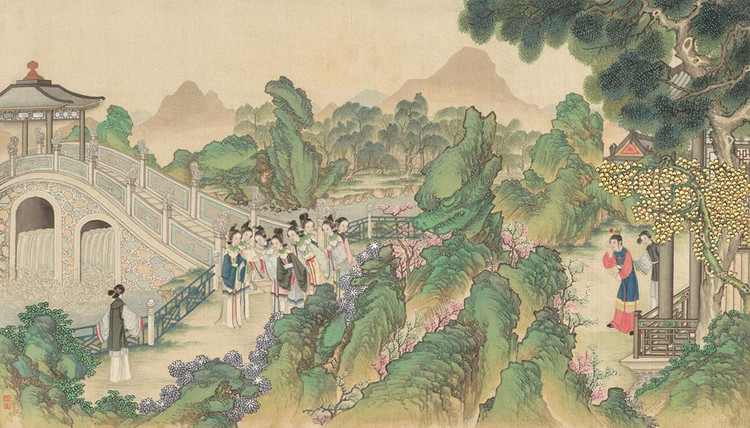
This week’s readings centered around poetic pieces and literary elements that are not commonly seen in Western literature. Wen is one of those literature elements. Have them read the excerpt by Longxi to help further the understanding of what Wen means and how it can be found in both stories. There is a strong connection to the spiritual world in Eastern culture and it can be seen in the literature.

What is wen and why is it made so terribly strange? By: Longxi, Zhang

STUDENT ACTIVITY

Arrange students desk in a circle. This promotes better discussion methods. Spend the first 15-20 minutes going over what Wen is. Wen can be a hard concept to wrap one’s mind around but it also highlights the cultural differences between Western and Eastern literature. Have the students think about the differing literary elements that they commonly see in Western literature.

What is Wen?

“To accomplish wen is, finally, in the simplest terms, to accomplish the ability to communicate fully and powerfully.” (Seaton, 2006) http://poetrychina.net/poeticspage/wen

Wen can be a hard concept to wrap one’s mind around. It is different from Western Literature and things that are different can be hard to understand. Wen in Chinese literature was the ultimate form of communication as it studies objects in nature and also patterns of nature. It is extremely different from Western Literature and it could be as hard as learning a new language when it comes to viewing literature from different cultural perspectives.

Wen is not imaginative or of fictional creation. It is transcendence. Transcendence is existence beyond the physical world. A Western cultural comparison could be found in the movie Transcendence with Johnny Depp starring. Chinese literature taps into the universe for its answers and explanations. It uses nature for forms of expression in the arts. Wen is the outwardly form of what is felt within brought to poetry, music, or other forms of art. It is a manifestation.

“…influence on the study of Chinese literature in the West and have helped shape a notion of that literature as something fundamentally different from what is usually understood as imaginative or fictional creation.” (Longxi, 1996)

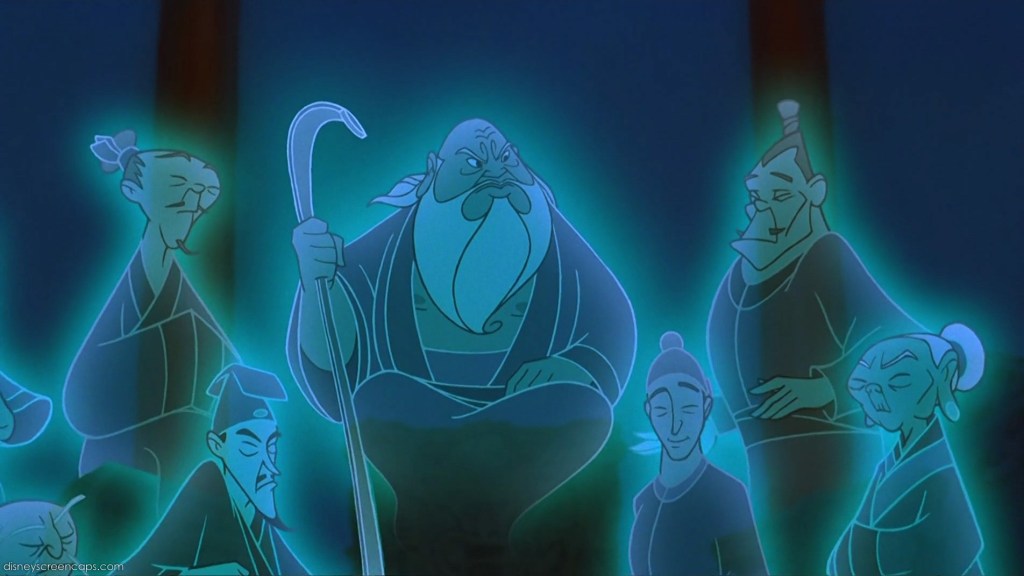
Another cultural comparison can be made by bringing up a popular Disney movie. Everyone knows the movie Mulan and it is shows some of that relationship of the spiritual world within the real world as seen with the elders within the movie. Once they watch a few scenes from the movie, have them think of how they can see Wen within the movie and then move onto this week’s readings.

Discussion questions

  1. Why is Chinese literature so different from Western literature? Is it because they have a more spiritual connection to the world in their art?
  2. Is Western literature less advanced than Chinese literature?
  3. What is a heavy influence found in Chinese literature? For example, a heavy influence in Western literature is Hebrew culture.
  4. What ways did you seen Wen in Mulan?

Teaching Wen in the classroom

For teaching Wen in the classroom, there can be various activities that can be done. Have the students analyze these two poems below and ask how Wen would be used in the analysis of one of the poems. The student will pick ONE poem and explain their understanding of wen against the poem.

“Peach Tree Soft and Tender”

“Peach tree soft and tender,

how your blossoms glow!

The bride is going to her home,

she will befits this house.

Peach tree soft and tender,

plump, the ripening fruit.

The bride is going to her home,

she well befits this house.

Peach tree soft and tender,

its leaves spread thick and full.

The bride is going to her home,

she well befits these folk.”

“Dead Roe Deer”

“A roe deer dead in the meadow,

all wrapped in white rushes.

The maidens heart was filled with spring;

a gentleman led her astray.

Undergrowth in forest,

deer dead in the meadow,

all wound with white rushes,

a maiden white as marble.

Softly now, and gently, gently,

do not touch my apron, sir,

and don’t set the cur to barking.”

Works cited

“Classic of Poetry.” The Norton Anthology of World Literature, edited by Martin Puchner, Shorter 3rd ed., Vol. 1. New York: Norton, 2013, pp.1317-1321.

Longxi, Z. (1996). What is wen and why is it made so terribly strange? College Literature, 23(1), 15. Retrieved from https://search-ebscohost-com.lopes.idm.oclc.org/login.aspx?direct=true&db=ehh&AN=9603264011&site=ehost-live&scope=site

Seaton, J. (2006). Wen – Poetry in Chinese Culture. Retrieved from http://poetrychina.net/poeticspage/wen

Create your own website, free on WordPress.com.Create your own website.
Start free