
Native American Spirituality
“The Night Chant (Orature Section)” from Navajo Ceremony
“Yellow Woman” by Leslie Marmon Silko
The cultural theme that can be seen in this week’s readings is the importance of spirituality to Native American tribes. Spirituality was an integral part of the identity for Native American individuals. The reader can interpret from both reading’s the varying relationships that Indian’s can form with the God’s they worship. In “The Night Chant” it is a ceremony of healing while in “Yellow Woman” it is a story of helplessness and benevolent spirits. We will analyze both stories and their cultural influence on literature.
STUDENT ACTIVITY
This week’s content will take a few days to get through and it is important to immerse the student as much as possible into the culture of Native American tribes. For the first day, we will make a popular culture comparison by having the students watch a popular Disney movie trailer known as Brother Bear. Assign the students to watch the full movie at home as homework. This comparison shows the importance of how nature can sometimes turn on the Native American people. Students will also notice this theme in “Yellow Woman.”
“Yellow Woman” by Leslie Marmon Silko
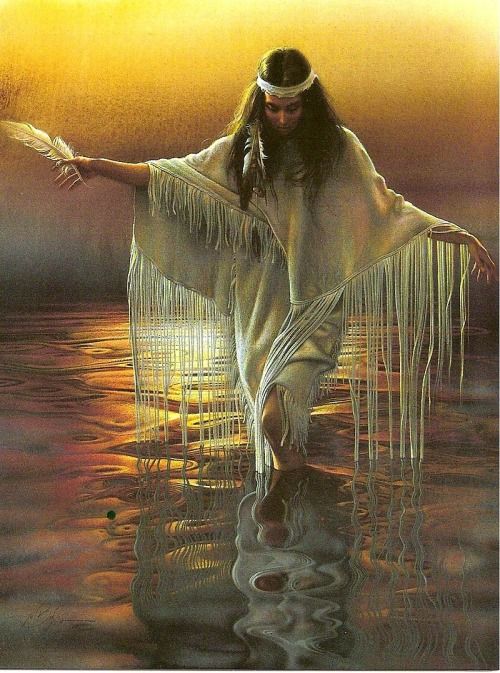
Nature is telling for the story of “Yellow Woman.” A Pueblo Indian woman finds herself entranced with a seductive Navajo man. It seems as if it is going to be a brief affair but the woman cannot find the strength to leave without saying goodbye. The woman touches on the story told by her elders about “Yellow Woman” which was a story about a woman who became trapped by a benevolent spirit called ka’tsina associated with forms of water. It becomes evident that the woman has now become one of the stories her grandparent warned her about. The woman is in denial that she is not being trapped by a ka’tsina but all the signs such as water and lack of anyone else in the first part of the story indicate otherwise. The woman has left behind her family but finds no desire to escape from the man. Everything is entrancing and keeping her wrapped up in the arms of the ka’tsina. The dream does not last though. The man takes her along with him after stealing and butchering livestock to sell the meat. Everything shatters when she is forced to flee due to the man being discovered a thief. The woman returns to her home and does not speak of what happened “I decided to tell them that some Navajo had kidnaped me, but I was sorry that old Grandpa wasn’t alive to hear my story because it was the Yellow Woman stories he liked to tell best.” (Silko)
STUDENT DISCUSSION QUESTIONS
Ask students these three questions and go around the circle to make sure every student has given their take on atleast one question by raising their hand and sharing with the class.
- Nature is important to both the story of “Brother Bear” and “Yellow Woman.” Nature can be unforgiving it seems to the Native American tribes. How was nature unforgiving in each story?
- In “Yellow Woman”, the woman speaks of her grandparents telling the haunting stories of “Yellow Woman” past. Do you think Native American’s viewed outsiders (such as colonists) as benevolent spirits or non-human?
- Native Americans worshiped nature and spirituality was rooted in that. What obvious forms of nature were of importance for both stories?
“The Night Chant (Orature Section)” from Navajo Ceremony
“From the pond in the white valley—
The young man doubts it—
He takes up his sacrifice,
With that he now heals.
5With that your kindred thank you now.
From the pools in the green meadow—
The young woman doubts it—
With that he now heals.
10With that your kindred thank you now.” (Navajo Ceremony)
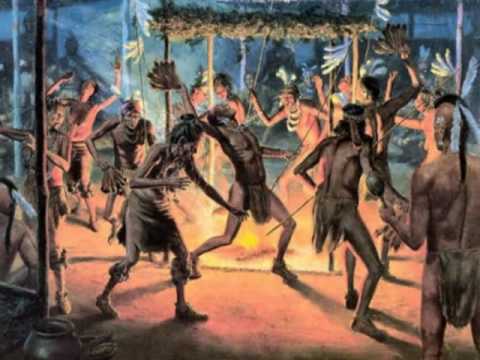
Native American ceremonies have long played an essential part of their culture. They communicate to the God’s through rituals and ceremonies. The use of repetition and symbolism are typically seen in their ceremonies. A popular culture comparison can be seen in “Man of The House” in this short clip, they are participating in a “naming ceremony” … This one is a good laugh. Anyways, in the “Night Chant” they are begging the Gods to heal their bodies physically and mentally. Through the use of repetition they emphasize their wishes. They also give thanks at the end of the chant. The ceremonies tell a story such as “Night Chant” from beginning to end.
STUDENT DISCUSSION QUESTIONS
- Repetition is seen in the Night Chant. Which emotion do you see being expressed through their words the most?
- Why do you think they use repetition so much in Native American ceremonies and rituals?
- Can you think of other times you have seen repetition be used in western literature as a form of expression?
ASSIGNMENT OPTIONS
WRITE A CHANT
Option 1:
Write your own “chant” that describes nature and spirituality. It can be a plea for something. Whatever you desire. Make sure it is a minimum 10-15 lines. Repetition must be used and a reference to nature. After you write the chant, explain what is going on during the chant such as where the chant is taking place and during what time of day.
WRITE A PAPER
Option 2:
Research spirits or deities of either goodness or darkness in Native American culture and write a short story about the spirit. Make sure to intertwine the natural form of the spirit with the literal form in the story. Such as the ka’tsina being seen as a maverick Navajo man. Must be a minimum of one page.
WORKS CITED
“Yellow Woman” The Norton Anthology of World Literature, edited by Martin Puchner, Shorter 3rd ed., Vol. 2. New York: Norton, 2013.
“Night Chant” The Norton Anthology of World Literature, edited by Martin Puchner, Shorter 3rd ed., Vol. 2. New York: Norton, 2013.

